Walking with the Leaves
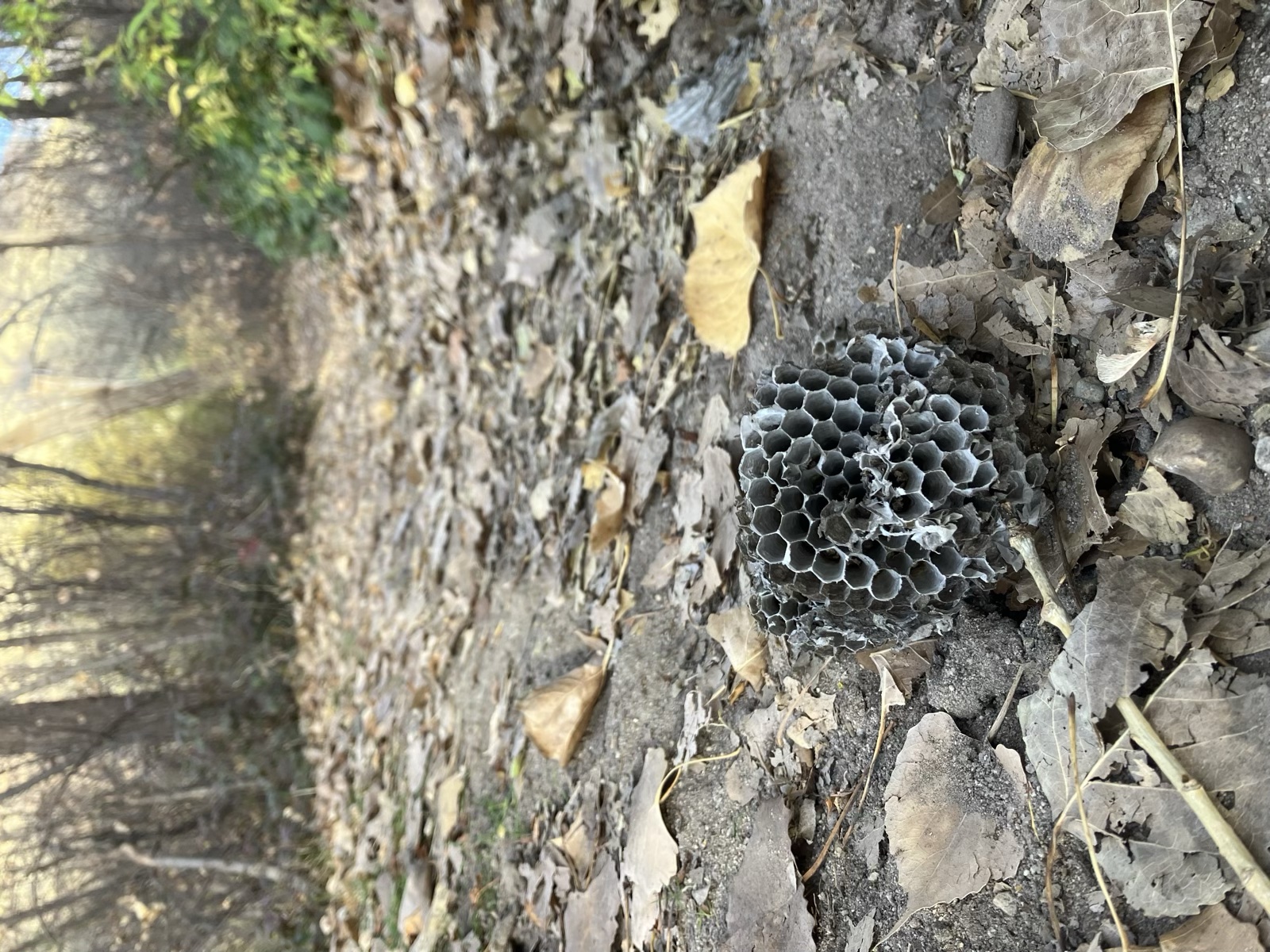
We found a honeycomb on the trail today. Not in a tree, but on the ground, fallen. The hexagonal cells were empty, the wax structure still intact but abandoned. I knelt down to look at it, this perfect architecture that had been built, used, and then left behind. The bees were gone. The honey was gone. Only the form remained, sitting there on the dirt path like a question.
I’ve been walking in the fall, practicing walking meditation on these trails. Not the formal kind with precise steps and counting, but the kind where you notice your feet on the ground, the breath in your body, the way the light changes as you move. The kind where you’re present to what’s actually happening, not trying to escape it.
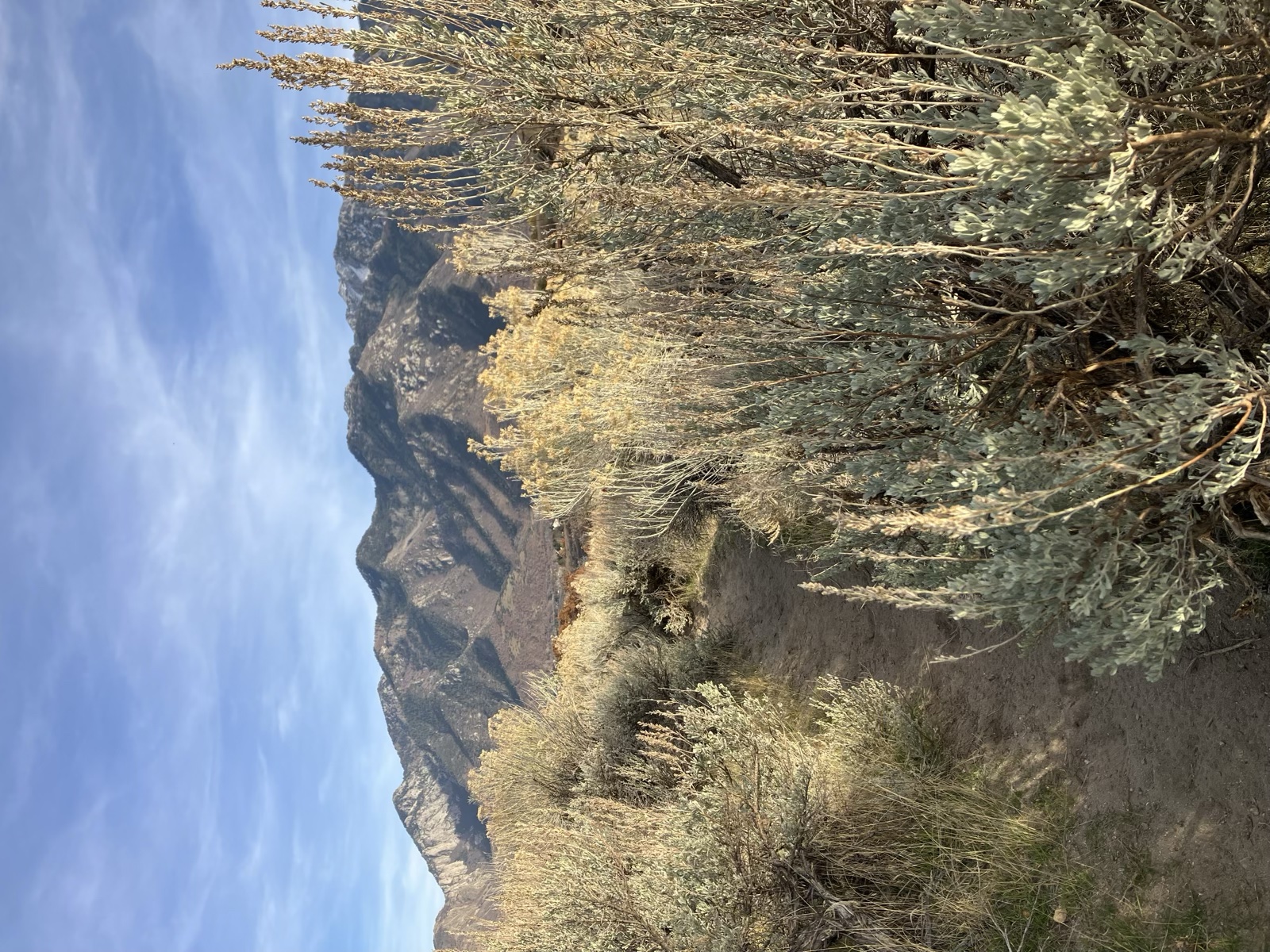
The grass has turned orange. Long, dry stalks that catch the light and hold it, standing in front of mountains that are still green but starting to show the shift. The sage is still there, silver-green in the same fields, holding its own against the change. But the grass—the grass has given itself over completely to the season.
In Buddhist teachings, impermanence (anicca) is one of the three marks of existence. Everything that arises will pass away. This is not a metaphor or a philosophical point—it’s a direct observation. The body ages. Relationships end. Seasons change. The grass that was green in spring is orange now, and by winter it will be gone, replaced by new growth waiting for the cycle to begin again.
I was reminded of something I heard in a dharma talk recently: as autumn approaches, deciduous trees pull back nutrients from their leaves before they fall. The tree reabsorbs what it can—nitrogen, phosphorus, other essential compounds—and then the leaf lets go. It’s not a passive dropping, but an active release. The tree takes what it needs to survive the winter, and the leaf releases its hold, falling away to decompose and feed the soil.
This image of letting go has stayed with me. Not as a passive giving up, but as an active release—taking what we need from an experience, a relationship, a season, and then letting it go. The tree doesn’t cling to the leaves. It doesn’t try to keep them green through winter. It does the work of reabsorption, and then it lets go.
Walking meditation in the fall makes this visible in a way that sitting practice sometimes doesn’t. Each step, each breath, each fallen honeycomb, each blade of orange grass is a reminder: this too will pass. The beauty of the autumn colors, the crisp air, the way the light hits the turning landscape—none of it will last. And neither will I. Neither will you. Neither will this moment.
This is where the teaching gets uncomfortable.
Because when I’m honest about impermanence, I have to face death. Not as an abstract concept, but as a reality. My death. The death of people I love. The death of species, ecosystems, ways of life. The honeycomb on the trail—was it abandoned because the colony collapsed? Because of pesticides, habitat loss, the same forces that are unraveling so much? The climate crisis is making this visible on a scale that’s hard to bear. The patterns I’ve relied on—that fall follows summer, that grass turns and falls—are becoming less reliable.
Buddhist teachings on death aren’t meant to be comforting in the way we might want. They’re meant to be clarifying. The Buddha taught that contemplating death is essential to awakening. Not because death is something to fear or avoid, but because understanding that this body, this life, this moment is temporary changes how we live. It can cut through the delusion that we have unlimited time, unlimited resources, unlimited capacity to avoid what’s difficult.
Walking with the honeycomb, with the orange grass, with the sage holding on in the fields, I’m practicing with this. Not trying to make it okay, not trying to spiritualize it away, but just being present to what is: the beauty and the loss, the turning and the falling, the impermanence of it all.
The practice isn’t to transcend this reality, but to meet it directly. To see clearly that everything changes, that everything passes, and to respond from that seeing. Not with despair or denial, but with the kind of care that comes from knowing how precious and temporary this all is.
The grass will keep turning. The season will change. The honeycomb will decompose back into the earth. And this practice—this walking, this noticing, this being present to what is—is how I’m learning to be with it all, without turning away and without getting overwhelmed.
Letting go isn’t about not caring. It’s about taking what we need—the nutrients, the lessons, the love—and then releasing our grip. The tree doesn’t abandon the leaf out of indifference. It does the work of reabsorption, honors what the leaf gave, and then lets it go so both can continue their cycles. The leaf becomes soil. The tree survives winter. Both are necessary.
What does this mean for practice in a nervous system and a body? It means showing up for the walking, for the fallen honeycomb, for the orange grass, for the grief that comes with seeing clearly. It means not bypassing the difficulty of impermanence, but also not getting lost in it. It means practicing with death as a teacher, not an enemy. And it means learning to let go—not as a passive giving up, but as an active release, taking what we need and then releasing our grip so we can continue the cycle.
This reflection was inspired by a Monday Night Meditation and Talk with Chris Benitez at the Durango Dharma Center.